Choosing Biodegradable Food Packaging is not just a materials decision. It affects how meals travel, how long they stay fresh, and what customers do with the package afterward. A fiber bowl may look ready for composting, yet its lining or local disposal options can change the outcome. Small details matter: a warm, oily takeaway curry tests a package differently from a dry pastry.
William McDonough, an architect and influential circular-design thinker, expresses a useful principle: “Waste equals food.” For a food business, that idea is a prompt, not a guarantee. A material described as biodegradable may need specific conditions to break down, and it may not be suitable for home composting. Check the product’s documentation, food-contact suitability, moisture and grease resistance, and compatibility with the disposal systems customers can actually access.
There is no perfect material for every menu. That’s the hard part. A café serving chilled salads may prioritize clarity and leak resistance, while a busy takeaway counter may need sturdy, stackable containers. Ask suppliers for test results and clear instructions, then trial packaging with real portions, sauces, and delivery times. Observe what happens. A lid that loosens during a short ride can undo a polished sustainability message. This guide will help you compare materials, verify claims, estimate costs, and choose an option that works in daily service—not just in a product photograph. And if the first choice falls short, revise it. That is responsible practice, too.
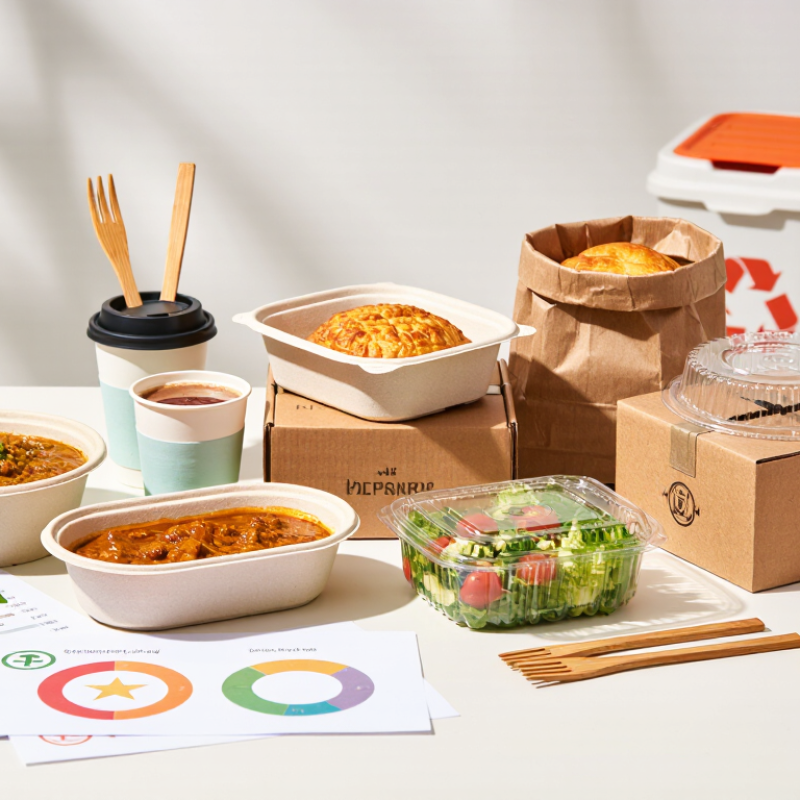
Before comparing biodegradable food packaging, map how food moves through your business. Note whether meals are served hot, chilled, or at room temperature, and how long they sit before customers eat them. A soup container faces different demands from a pastry sleeve. Record portion sizes, sauces, oil, and whether customers need cutlery or a secure lid. Small details matter.
Test packaging with your actual menu, not just an empty sample. Fill a container with a hot, saucy meal and check for leaks, softening, and comfortable handling after 20 minutes. Try a chilled item too. This is easy to overlook. Also measure storage space and check whether containers fit your packing line or delivery bags. A package that performs well but slows service may not suit a busy lunch rush.
Ask suppliers for clear information about materials, heat limits, and the conditions needed for the packaging to break down. Then check whether suitable collection or processing facilities are accessible to your business and customers. “Biodegradable” alone does not tell you what happens after disposal. Requirements can change by menu, season, and service style, so keep notes from staff and customer feedback. A few trial runs may reveal an awkward lid or a portion that needs better support. Don’t assume the first choice is right.
Use these example priority scores to start assessing your needs. A score of 1 means low priority; 5 means critical. Consider your menu, serving temperatures, delivery times, and local composting options when selecting packaging.
Compare the material with the food, not just the label. OECD’s Global Plastics Outlook reports that packaging generated 40% of global plastic waste in 2019. Molded fiber works well for sturdy trays and clamshells, but can soften when holding wet food. Paper is light and printable; however, plastic or barrier coatings may complicate recycling or composting. Check the complete package, including its lining.
For cups, clear lids, and cold-food containers, PLA can provide transparency and stiffness. Many PLA items need industrial composting conditions, which may not be available to customers. PHA can suit some flexible films and molded items, but performance depends on the product and disposal environment. European Bioplastics and nova-Institute reported that packaging represented 43% of global bioplastics production capacity in 2023. That share signals growing use, not automatic environmental benefit. Not a silver bullet.
Match the format to real service conditions. A greasy, hot takeaway meal needs different moisture and heat resistance than a dry pastry. Ask suppliers for testing data, accepted disposal routes, and clear instructions for staff and customers. Then trial the package during a busy shift: check for leaks, soggy corners, and lids that slip. One detail is easy to miss. A technically compostable package can still become waste when local collection cannot process it.
Choosing biodegradable food packaging starts with food safety, not the word “biodegradable.” Check that each item is suitable for its intended food, temperature, and contact time. A container used for hot soup may need different testing from a wrapper for dry bread. Ask suppliers for food-contact declarations, test reports, and batch traceability. Confirm that documents match the exact material and product you plan to buy. Details matter.
Environmental certifications need careful reading. Check which standard was used, what the certificate covers, and whether it applies to the finished package or only its raw material. Compostable does not always mean home-compostable; some materials require commercial facilities that may not be available nearby. Local collection rules also vary. It is easy to overvalue a logo and overlook disposal reality. I would verify claims against the certificate and the waste services your customers can actually access.
Tips: Request current documents before ordering samples. Test packages with your real menu, including oily foods and hot fillings. Keep supplier records together, and ask how the material performs during storage. If a claim is vague, ask for specifics in writing. That extra check can prevent a costly mismatch.
Before comparing prices, test how the package performs during a real service shift. Fill it with the foods you sell, then check for leaks, softened corners, and heat loss after 20 minutes. A lid that slips during delivery can cost more than a small difference in unit price. Keep samples near the pass, not just in a supplier’s brochure.
Compare the full cost per order, including lids, storage space, and any changes to packing time. Some compostable materials need dry storage, and bulky cartons can crowd a small kitchen. Ask suppliers for clear performance data under conditions similar to yours. Then run a short trial with staff. Their feedback may reveal awkward stacking or lids that take too long to close. I would not trust one quiet test day; busy service changes everything.
Disposal options matter just as much. Check with your local waste collector or composting facility before choosing a material, because accepted items and collection rules vary by area. “Compostable” on a package does not guarantee that a nearby facility can process it. If customers use shared bins, clear disposal instructions can help, but only when those instructions match local services. This part is easy to overlook. Recheck it when collection contracts or facility policies change.
Choosing a packaging supplier takes more than comparing unit prices. Ask for material specifications, food-contact documentation, and test results for the exact container you plan to use. Confirm whether “biodegradable” describes the whole package, including coatings, lids, and labels. The details matter.
Check how the packaging behaves with your actual menu. A container that holds a warm, oily lunch may soften under steam or leak during delivery. Request samples, then test them with typical portions and realistic holding times. Ask suppliers what conditions are needed for composting and whether local waste facilities accept the material. Claims can sound simple. Disposal rarely is.
Plan the change in stages. Start with one product or location, and track breakage, customer feedback, storage space, and cost per serving. Train staff to separate new packaging correctly; confusing bins can undo a thoughtful switch. Keep a modest supply of the current packaging during the trial, but set a clear review date so both options do not linger for months. Compare results before expanding. A pilot may reveal that one item works beautifully while another does not. That is useful, even if it means revising the plan.
| Packaging need | Material option | Typical fit and limitations | End-of-life check | Supplier questions and transition action |
|---|---|---|---|---|
| Takeaway bowls and trays | Molded fiber or paperboard, sometimes with a barrier coating | Can suit many solid foods and some hot meals. Grease and liquid resistance depend on the item’s coating and construction. | Check whether the complete package, including any coating, is accepted by local composting or recycling services. Do not assume all fiber items are recyclable or compostable. | Request the full material specification and test samples with your greasiest and sauciest menu items. Confirm local collection options before ordering. |
| Cold cups and clear food containers | PLA or another certified compostable plastic, where available | May provide clarity for cold drinks or chilled foods. Some compostable plastics are not designed for hot-fill or high-heat use; verify the supplier’s stated limits. | Compostability typically requires specified conditions and may mean industrial composting. Confirm that a suitable facility accepts the exact product; it should not be placed in recycling unless local guidance permits it. | Ask for applicable certification and evidence for the finished article, not just its raw resin. Run a cold-service trial and check lid fit and leakage. |
| Cutlery and small service items | Wood, molded fiber, or certified compostable polymer | Wood and fiber avoid conventional plastic but can feel different in use. Polymer options vary in heat tolerance and local availability. | Verify local disposal routes and whether items are accepted with food scraps. “Biodegradable” alone does not specify where or how quickly an item will break down. | Test strength and customer experience with representative meals. Consider offering cutlery only on request to reduce unnecessary packaging. |
| Bags, wraps, and sandwich packaging | Uncoated paper, paper with a barrier, or certified compostable film | Paper can work for dry or short-duration uses. Moisture- and grease-resistant performance depends on the barrier layer, which may affect disposal options. | Check whether coatings, windows, inks, and adhesives are compatible with the stated disposal route. Local rules differ. | Ask suppliers to identify every material layer. Trial the package for grease transfer, condensation, and time in delivery conditions. |
| Supplier qualification | Any shortlisted material or format | Assess food-contact suitability, product consistency, lead times, minimum order quantities, and capacity to supply the required sizes. | Request current certificates or test reports relevant to the exact finished product and intended disposal claim. Confirm the certification’s scope and validity. | Obtain written specifications, samples, pricing, and delivery terms. Ask how material or manufacturing changes will be communicated. |
| Packaging transition plan | Phased replacement of current items | Prioritize high-volume items and match each replacement to actual food, temperature, storage, and delivery conditions. | Map disposal instructions to local waste services. Clear customer guidance helps avoid contamination of recycling and compost streams. | Pilot a small range, record leakage, damage, customer feedback, and unit cost, then expand after performance and supply are confirmed. Use existing stock before switching where practical. |
Note: “Biodegradable” does not by itself guarantee a specific breakdown time or disposal route. Compostability and recycling acceptance depend on the product, applicable standards, available facilities, and local rules. Confirm claims and disposal instructions for the exact packaging you purchase.
Different foods need different protection. Hot soup needs more heat and moisture resistance than a dry pastry.
Molded fiber can make sturdy trays and clamshells. Wet food may soften it, especially during a long meal.
No. Plastic or barrier coatings can complicate disposal, so check the full package, including its lining.
PLA can offer clear, stiff cups, lids, and cold-food containers. Some items need industrial composting facilities.
No. Local collection may not accept the package. A useful label can still leave customers unsure.
Request food-contact declarations, test reports, and batch traceability. Confirm they match the exact item and intended food.
Check the standard, certificate scope, and whether it covers the finished package. Logos alone are not enough.
Try the package with oily food and hot fillings. During a busy shift, check leaks, soggy corners, and slipping lids.
Give clear instructions based on local waste services. I might overlook that detail, so written guidance helps.
Choosing Biodegradable Food Packaging starts with understanding your business’s needs: the foods you serve, how they are stored or delivered, and what protection and presentation they require. Compare suitable materials and formats, considering their durability, moisture and heat resistance, and compatibility with different types of food. Check that each option meets relevant food safety requirements and has credible environmental certifications, rather than relying on broad sustainability claims.
Before making a decision, assess total costs, packaging performance, and whether local facilities can accept the material for composting or other disposal. A package’s environmental benefits depend in part on how it is handled after use. Finally, evaluate suppliers for consistent quality, clear product information, and dependable availability. Plan a gradual transition, test packaging in everyday operations, gather feedback from staff and customers, and adjust your choices to balance food protection, practicality, and environmental goals.