Material Engineering & Innovation Product Development Trends in Microwaveable Plastic Bento Packaging
The Technical Evolution Driving Next-Generation Foodservice Containers
The engineering of microwave safe plastic bento boxes has progressed rapidly over recent years due to advancements in polymer additives, precision injection molding machinery, and eco-design mandates. B2B purchasers who stay ahead of these development trends can optimize brand image while drastically reducing freight damage and operational customer complaints.
1. Mineral-Filled Polypropylene (Talc-PP) Formulations
To address global environmental target metrics and plastic reduction goals without compromising thermal stability, raw material suppliers and injection molders have introduced Talc-Filled Polypropylene (Talc-PP) formulations. By infusing 20% to 40% natural calcium carbonate or talc mineral into food-grade PP resins, manufacturers achieve dual benefits: a reduced fossil-fuel plastic footprint and enhanced flexural modulus. Talc-PP bento boxes exhibit elevated Heat Deflection Temperatures (HDT), preventing container sagging under dense, piping-hot meals during microwave operation.
2. Advanced Anti-Fog Clear Lid Technology
Visual appeal is critical in grab-and-go retail environments and food delivery apps. Traditional plastic lids fog up instantly when hot steam condenses on the interior surface, obscuring the meal. Modern development trends incorporate non-ionic surfactant anti-fog additives directly into the polypropylene lid resin during extrusion, or apply a micro-thin anti-fog coating post-molding. This ensures crystal-clear presentation regardless of moisture level or temperature gradient.
3. Zero-Cross-Contamination Compartment Geometry
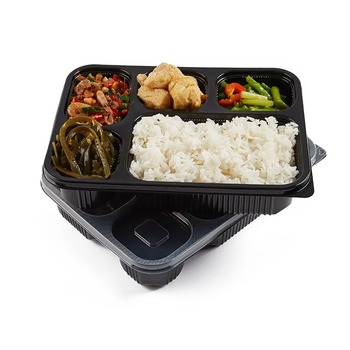
Legacy multi-compartment bento boxes suffered from internal fluid migration—hot curry or sauce from compartment A spilling into rice or salad in compartment B during transit. Current structural engineering utilizes 3D CAD dieline profiling where the lid features matching male-female internal ribbing. When snapped shut, each compartment acts as an isolated pressure cell, preserving distinct meal flavors and dish presentation across long courier journeys.
4. Lightweighting with Rib-Reinforced Wall Architecture
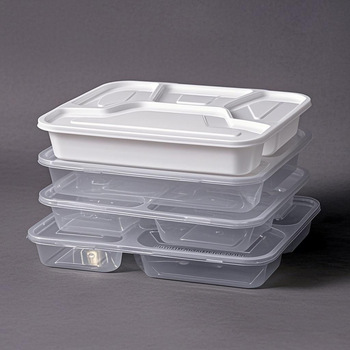
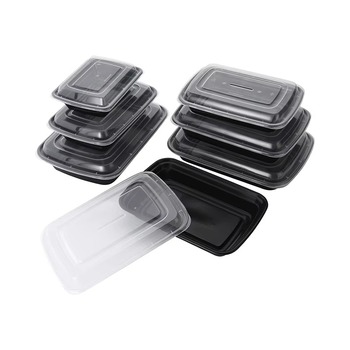
Through high-precision computer-aided mold design, wall thickness can be reduced from 0.8mm to 0.45mm without lowering vertical crush strength. Strategically engineered vertical ribbing and radial perimeter beads redistribute structural loads, permitting dense stacking in delivery bags while trimming overall material mass and international logistics freight costs.
 Microwave Safe