Core Packaging Products & Solutions
Explore our export-ready food packaging range, crafted under strict food-contact safety standards.
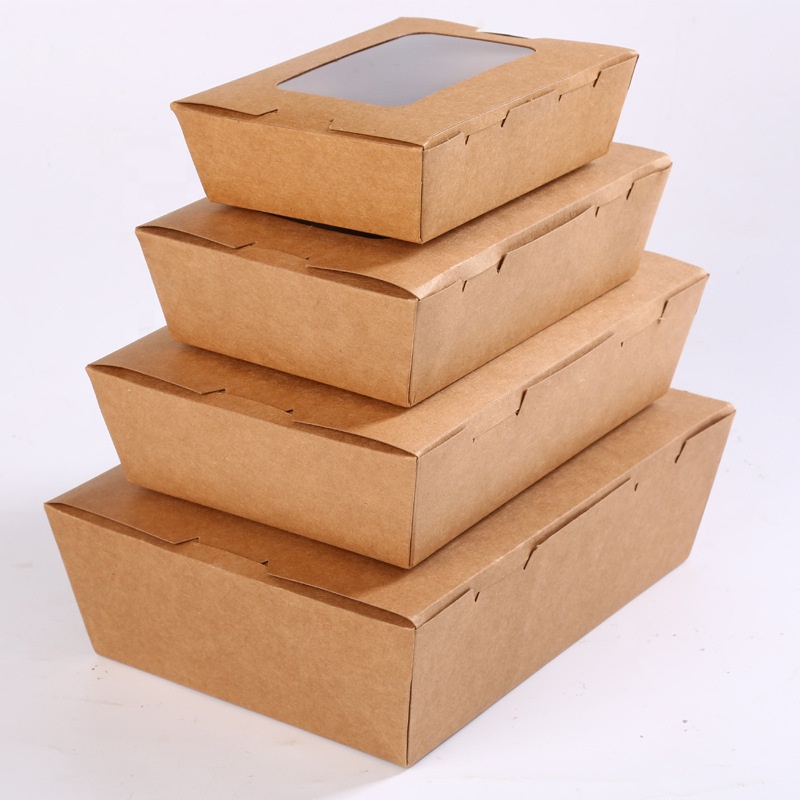


Technical Whitepaper: Engineering Next-Generation Paper Food Pails & Sustainable Takeout Containers
The global quick-service restaurant (QSR) and food delivery sectors are undergoing a structural shift driven by single-use plastic restrictions, corporate net-zero commitments, and evolving consumer demand for eco-friendly packaging. As a premier China paper food pails factory and global exporter, Guangdong Pudse Packaging Technology Co., Ltd. sits at the intersection of material science, precision structural converting, and international supply chain compliance.
Paper food pails—traditionally referred to as Asian noodle pails, takeout buckets, or fried chicken containers—require sophisticated engineering to balance thermal resistance, liquid containment, grease barrier integrity, and end-of-life compostability or recyclability. This whitepaper analyzes the manufacturing architecture, barrier coating breakthroughs, procurement criteria, and future market dynamics governing food-grade paperboard packaging exported from China.
Core Procurement Insight: Modern paper food pail selection is no longer merely a pricing decision. It is an engineering alignment problem involving fiber density (GSM), polymer or bio-dispersion coating weight, rim-curl structural strength, heat-sealing integrity, and regional legislative compliance (e.g., EU Single-Use Plastics Directive, US State PFAS bans, and FDA 21 CFR 176.170).
1. Structural Anatomy & Material Selection in Paper Pail Manufacturing
A high-performance paper food pail must maintain structural integrity under adverse conditions: containing hot broths (up to 95°C–100°C), heavy sauces, or high-fat fried items without softening, leaking along side seams, or delaminating at bottom folds. Achieving this performance depends on raw material selection and converting precision.
Virgin Kraft vs. Cupstock Substrates
We utilize 100% virgin wood pulp paperboard ranging from 230 gsm to 350 gsm. Unbleached kraft provides high tensile strength and natural eco-aesthetics, while bleached solid bleached sulfate (SBS) paperboard provides a crisp surface for high-resolution brand offset printing.
Double-Wall & Insulation Options
For high-temperature applications like soups and fresh pasta, double-wall corrugated or air-gap insulated paper pails protect end-consumer hands while eliminating the need for separate external corrugated sleeves, reducing total packaging SKUs.
Precision Ultrasonic & Thermal Seam Welding
Side-seam and bottom-disc formation use high-frequency ultrasonic seam welding or precision thermal heat-sealing. This eliminates adhesive breakdown when storing hot, oily food products over extended delivery radiuses.
2. Technical Material Comparison & Barrier Technology Matrix
The primary technical differentiator among paper food pail manufacturers lies in barrier technology. Historical Polyethylene (PE) coatings are increasingly evaluated alongside Polylactic Acid (PLA), Water-Based Dispersion Coatings (WBBC), and PFAS-free oil resistance formulations.
| Coating / Barrier Type | Heat Tolerance Limit | Grease Barrier (Kit Test) | Microwave Suitability | Compostability & Recyclability | Typical Industrial Target Application |
|---|---|---|---|---|---|
| Standard Single/Double PE | -20°C to 95°C | Kit 12 (Excellent) | Short Reheating Only (< 2 min) | Standard Mill Recyclable (Specialized Plants) | Noodle Pails, Rice Boxes, General Fast Food |
| Compostable PLA (Bio-Polymer) | -15°C to 85°C | Kit 10 - 11 (High) | Not Recommended for High Heat | Industrial Compostable (EN 13432 / BPI) | Eco-Conscious QSR Takeout, Cold/Warm Salads |
| Water-Based Dispersion (WBBC) | -20°C to 120°C | Kit 9 - 12 (Adjustable) | Microwave & Oven Safe (Up to 120°C) | 100% Repulpable & Paper-Stream Recyclable | Next-Gen Zero-Waste Packaging, Soup Buckets |
| PFAS-Free Bio-Wax Coating | -10°C to 70°C | Kit 8 - 10 (Moderate to High) | Limited | Home Compostable / Biodegradable | Dry/Greasy Snacks, Bakery Pails, Street Food |
3. Future Procurement & Technological Trends in Food Container Manufacturing
As global importers look to de-risk their Asian supply chains while upgrading product performance, four prominent technological and market trends are shaping paper food pail procurement through 2030:
1. Absolute Elimination of PFAS & Fluorinated Compounds
Regulatory authorities in North America and Western Europe have implemented strict bans on Per- and Polyfluoroalkyl Substances (PFAS) in food-contact materials due to bioaccumulation concerns. Modern Chinese OEM factories are replacing legacy fluorinated greaseproof agents with advanced plant-derived starch matrix formulations and nano-cellulose barriers that deliver oil resistance without fluorinated chemistry.
2. In-House High-Speed Heidelberg & Roland Printing Precision
Food packaging serves as a primary offline brand touchpoint. Leading factories now integrate heavy industrial printing infrastructure—such as German Roland 4-color and 6+1 printing equipment—directly into their conversion plants. This enables high-speed CMYK reproduction, food-safe soy ink compliance, localized spot UV varnishing, hot foil stamping, and tactile embossing under one roof.
3. Hybrid Structural Formats & Nestable Stackability
To reduce international ocean freight shipping costs (which are driven by volume cubic meters), modern food pails are engineered with optimized taper angles. Precision tapered sidewalls ensure nesting ratios exceed 95%, allowing more units per pallet while maintaining anti-jamming top rim profiles for rapid separation during high-volume restaurant service.
Enterprise Capability: Guangdong Pudse Packaging Technology Co., Ltd.
As a verified manufacturer based in Foshan, Guangdong, China, Guangdong Pudse Packaging Technology Co., Ltd. (Pudse) operates as a full-service developer and manufacturer of disposable food tableware and eco-friendly paper food packaging solutions. Serving global distributors, restaurant chains, and retail buyers across North America, South Asia, Eastern Asia, and Europe, our integrated manufacturing model combines pre-press design, high-speed offset printing, precision die-cutting, automated pail forming, and rigorous quality control.
Why International Importers Partner with Our Foshan Factory
Operating out of the Dali Town packaging hub in Nanhai District, Foshan, our plant benefits from immediate access to deep-water shipping channels through Guangzhou and Shenzhen ports. Our structural design teams work directly with client dielines to deliver rapid physical prototyping, structural leak testing, and fully custom-printed production runs.
- In-House Printing Infrastructure: Outfitted with German Roland 4-color offset presses and 6+1 color printing machines, supporting matte/gloss lamination, UV coating, gold foil stamping, and custom embossing.
- Flexible Order Architectures & Low MOQs: While dedicated paperboard coating and cup forming lines typically run efficiently at 10,000 to 20,000 units, our stock deli boxes, wrap sleeves, and standard items offer low MOQ entry points (starting from 10 to 1,000 units) to support growing brands.
- Comprehensive Quality Assurance & Testing: Every batch undergoes Cobb water absorption testing, edge-wicking tests, microwave thermal tolerance verification, and leak-proof side seam stress testing before export packing.
- Transparent Logistics & Payment Flexibility: Full support for international Incoterms including FOB, CFR, CIF, EXW, DDP, and DDU with multivariable payment options (T/T, L/C, Credit Card, PayPal, Escrow) in major global currencies (USD, EUR, GBP, JPY, CAD, AUD, HKD).
Paper Food Pail Procurement FAQ (Frequently Asked Questions)
Addressing the technical, regulatory, and commercial inquiries most frequently raised by corporate packaging buyers, brand owners, and import managers:
Q1: How do paper food pails prevent leaking when holding greasy noodles or hot soups?
Our food pails utilize continuous internal barrier coatings (such as PE, PLA, or Water-Based Dispersion) combined with high-pressure ultrasonic thermal bottom sealing. Unlike standard folded boxboard, paper pails feature a round folded or tightly interlocking leak-proof bottom disc that prevents liquid migration along raw paperboard edges.
Q2: Are your paper food pails compliant with PFAS-free regulations in North America and Europe?
Yes. We offer 100% PFAS-free packaging solutions. We utilize specialized water-based dispersion technology (WBBC) and certified bio-resins that pass strict fluorine total content testing (below detection limits) in accordance with California AB 1200, US State requirements, and European REACH/Food Contact regulations.
Q3: What is the standard MOQ for custom-printed paper pails versus stock products?
For fully customized paper food pails featuring custom logo offset printing and non-standard dimensions, the minimum order quantity (MOQ) typically starts between 10,000 and 20,000 pieces to optimize raw material coating and high-speed rotary die-cutting runs. Stock sizes or unprinted kraft products can be ordered in lower volumes.
Q4: Can paper food pails be safely microwaved by the end consumer?
Pails manufactured with Polypropylene (PP) linings or Water-Based Dispersion coatings (WBBC) are microwave safe up to 120°C. Standard PE-lined pails can handle short microwave reheating, while wire-handled pails must have their metal handles detached prior to microwaving (or specify our metal-free fold-down paper tab handle design).
Q5: What file formats and artwork proofs are required for OEM printing?
We require vector artwork files in AI, PDF, or EPS formats with all fonts converted to outlines and CMYK / Pantone color codes explicitly defined. Before mass production, our prepress engineering team provides a 3D digital proof and a flat structural dieline proof for sign-off.
Q6: How fast is the sample prototyping and mass production lead time?
Existing stock samples can be dispatched within 24–48 hours. Custom printed structural samples require approximately 5 to 7 working days for plate making and sample converting. Mass production lead times typically range from 15 to 25 days post artwork approval and deposit confirmation.
Ready to Source High-Performance Paper Food Pails Factory Direct?
Contact Guangdong Pudse Packaging Technology Co., Ltd. today to request sample kits, custom structural dielines, or instant OEM quotations from our Foshan engineering team.
Send an Inquiry